
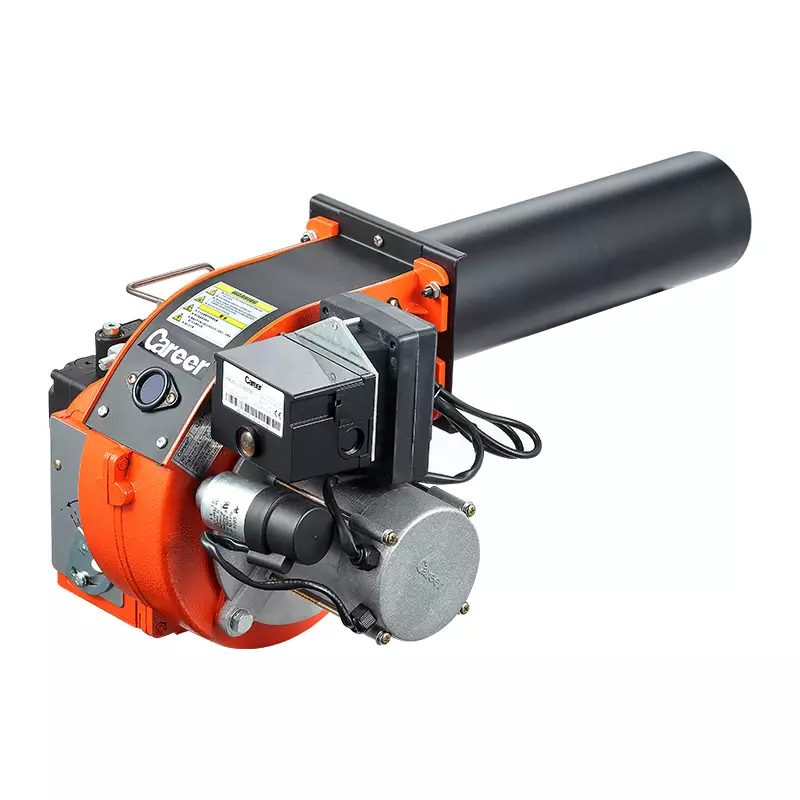
Diesel combustion efficiency hinges on a single physical variable that most operators check but few truly understand: burner pressure. Too low, and fuel droplets remain too large to ignite completely; too high, and penetration becomes excessive, cooling the flame and wasting energy.
Burner pressure doesn’t simply move fuel forward—it fundamentally reshapes the spray geometry that determines how thoroughly diesel meets combustion air. Understanding this relationship reveals why pressure stability is a prerequisite for reliable, efficient diesel heating.
Pressure’s Role in Diesel Fuel Atomization
Pressure transforms liquid fuel into a dispersed mist by forcing it through a precisely sized nozzle, creating shear stress at the fuel-air boundary. Higher pressure narrows the orifice’s flow path relative to the volume pushing through, accelerating fuel velocity and fracturing the liquid stream into progressively smaller droplets.
This atomization is not incidental; it is the foundation of combustion in a diesel burner. Without adequate pressure, fuel exits the nozzle as coarse particles that require longer distances to evaporate and ignite, extending the ignition delay and pushing combustion deeper into the furnace.
The relationship between pressure and droplet size is predictable: each doubling of pressure reduces median droplet diameter by approximately 20 to 30 percent. A diesel burner running at 80 psi produces droplets roughly 50 micrometers in diameter; the same burner at 100 psi produces droplets near 35 micrometers.
Smaller droplets expose more surface area to combustion air, accelerating evaporation and mixing. Pressure below design specification—dropping from 100 psi to 60 psi due to pump wear—disrupts spray geometry entirely, creating an irregular, asymmetrical pattern with large unburned particles trailing behind the combustion zone.
Combustion Completeness and Flame Characteristics
Atomization quality directly determines flame behavior. A well-atomized spray from adequate pressure produces a compact, bright flame anchored close to the burner quarl; fuel and air mix rapidly, combustion completes within the furnace envelope, and heat is released efficiently.
Poor atomization from low pressure creates a thin, elongated flame that stretches deeper into the furnace, often with yellow or sooty regions indicating incomplete combustion and carbon particle formation.
Smaller droplets evaporate faster, creating a vapor cloud that ignites uniformly. Larger droplets from low-pressure atomization reach their saturation point—the distance at which enough evaporation produces combustible vapor—much further downstream.
This delay shifts the peak combustion zone away from the burner, where it causes extended residence time for unburned fuel, increased carbon formation, and inefficient heat release.
High pressure creates the opposite problem: excessive spray penetration. A nozzle designed for 100 psi, fed at 140 psi, produces a high-velocity jet that penetrates too deeply. The spray concentrates unevenly; fuel encounters combustion air in patches, leaving rich zones that cannot ignite fully. The spray cools as it penetrates, reducing flame temperature and combustion rate. High-pressure atomization also increases spray impingement on furnace walls, where unburned fuel condenses and collects as deposits.
Pressure-Induced Efficiency and Thermal Losses
Low-pressure combustion creates measurable efficiency penalties. When atomization is poor, 3 to 5 percent of fuel passes through incompletely burned, exiting as carbon monoxide and unburned hydrocarbons. These losses reduce net heat output and increase stack temperature. An oil burner high efficiency unit operating at low pressure may see a 2 to 3 percent drop in thermal efficiency, equivalent to burning 20 to 30 extra gallons per thousand operating hours.
High-pressure combustion introduces different losses. Excessive spray penetration prevents complete mixing, trapping fuel in overly rich zones. The unburned carbon forms deposits on furnace surfaces, insulating them and reducing heat transfer. A furnace operated chronically at high pressure accumulates soot deposits that can reduce thermal efficiency by 5 to 10 percent until cleaning occurs.
Equipment Stress and Wear Under Pressure Variation
Pressure stability directly affects burner and fuel system longevity. The fuel pump and pressure control valve are designed to operate within a specific band, typically ±10 percent of setpoint. Continuous drift beyond that range accelerates wear. A pump cycling between 70 and 130 psi due to a failing regulator experiences stress reversal that fatigues seals and bearings. Pressure spikes exceeding design limits can rupture seals in fuel lines, creating leaks and air ingestion.
Nozzles are precision-machined components where the orifice diameter is typically 0.007 to 0.010 inches. Debris suspended in diesel fuel accumulates in these openings. Low pressure allows particles to lodge and restrict flow; high pressure forces them deeper into the orifice, potentially blocking it entirely. A blocked nozzle creates a distorted spray pattern, causing the flame to tilt and overload one side of the furnace wall thermally, accelerating degradation.
Optimizing Pressure for Stable Combustion
Burner manufacturers specify operating pressure ranges based on combustion chamber design and fuel type. A diesel burner designed for light oil typically operates between 90 and 110 psi; deviations compromise both combustion and equipment. Maintaining pressure requires a fuel supply adequate to the burner’s volume demand, a pressure relief valve set to specification, and a fuel line filter that prevents debris from reaching the nozzle.
Career Burner systems are engineered with integrated pressure regulation that maintains setpoint stability, ensuring atomization geometry remains consistent. Operators can verify pressure stability by observing flame behavior: a stable, bright flame with a sharp edge indicates proper atomization; a flickering, elongated, or sooty flame suggests pressure is drifting outside specification.
Seasonal fuel changes also affect optimal pressure. Winter diesel has lower viscosity than summer fuel; the same pressure produces finer atomization in cold months. Career Burner designs include pressure gauges and, in higher-tier models, electronic pressure transducers that allow operators to set maintenance schedules based on actual pressure stability rather than calendar intervals.
Pressure as a Foundation for Reliable Heating
Burner pressure is often overlooked until efficiency problems surface. In reality, pressure trending reveals wear progression. A burner maintaining 100 psi initially but drifting to 95 psi after six months signals pump degradation; by month nine, drift to 85 psi produces visible combustion changes. Catching this drift early prevents the efficiency collapse that requires emergency service.
Burner pressure is not an abstract specification—it determines spray geometry, which controls combustion completeness, efficiency, and equipment longevity. Operating outside the designed pressure range pushes the diesel combustion process into regimes where efficiency declines and thermal output becomes unreliable. Maintaining pressure stability is as fundamental to heating system performance as air supply balance or combustion chamber sealing.
