
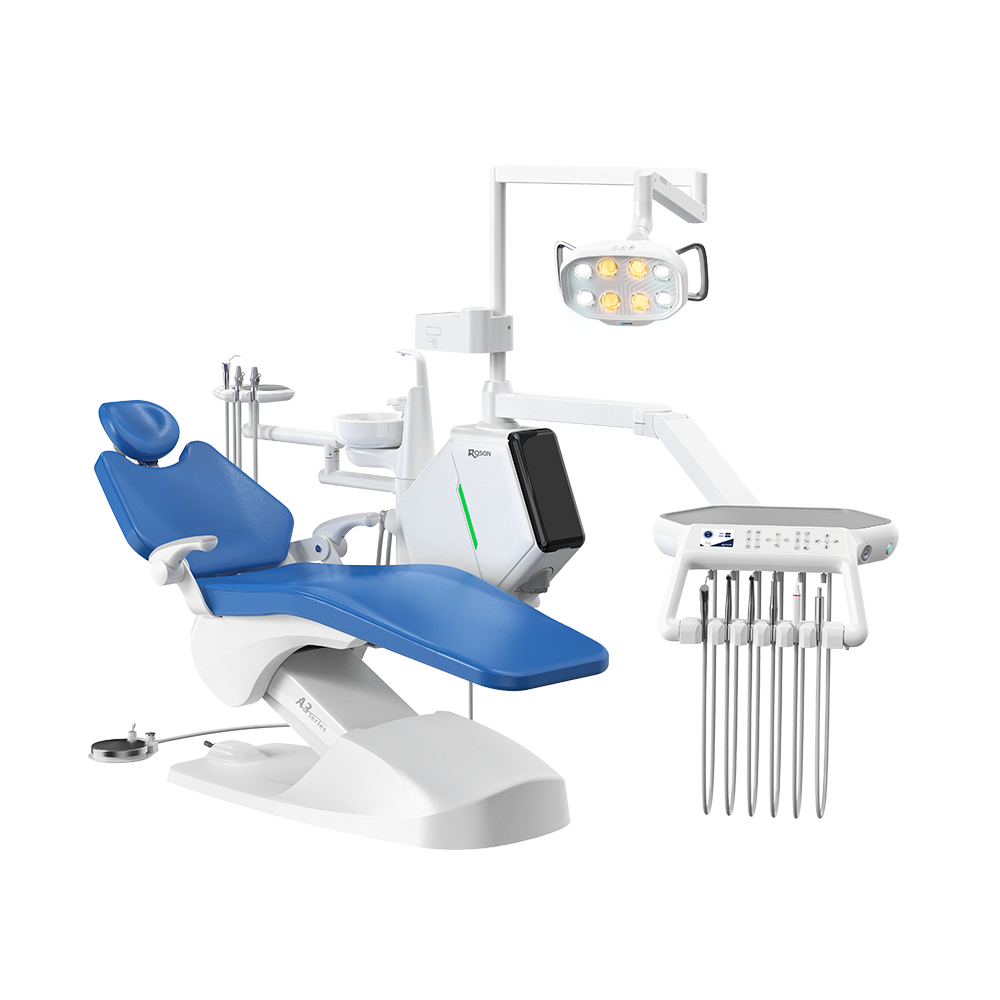
Choosing a dental treatment chair is not simply a matter of selecting the brand with the strongest reputation. Different manufacturers emphasize different priorities, including ergonomics, durability, digital integration, configuration flexibility, service support, and overall investment level. A chair that suits a high-volume practice may not be the most appropriate choice for a startup, distributor, or multi-room clinic.
The current market includes established names such as A-dec, Planmeca, Dentsply Sirona, Midmark, and Roson. Recent industry comparisons place these manufacturers across premium and value-oriented segments, making a direct comparison more useful than a universal ranking.
What Separates One Chair Brand From Another?
A meaningful dental chair comparison should begin with the operating philosophy behind each product. Some manufacturers emphasize long-term mechanical reliability and ergonomic positioning. Others focus heavily on digital connectivity or integration with a broader equipment ecosystem.
A-dec provides a clear example of the first approach. Its current chair range includes the A-dec 300, 400, and 500, with differences in drive systems, patient positioning, backrest design, swivel capability, controls, and load capacity. The company also states a 10-year warranty for these models.
That creates a strong proposition for practices prioritizing established engineering and long-term use. The trade-off is that premium construction and extensive service infrastructure generally place such systems at a higher investment level than budget-focused alternatives.
A-dec: Strong Reliability, Premium Positioning
A-dec’s major strength is the depth of its chair engineering. The A-dec 500, for example, combines a hydraulic drive system, 60-degree swivel, virtual-pivot positioning, a thin backrest, dual-articulating headrest, and delivery-system or foot-switch controls. Its published maximum patient weight is 500 pounds (227 kg).
The A-dec 300 takes a somewhat more streamlined route. It retains features such as a thin backrest, dual-articulating headrest, 60-degree swivel, and hybrid lift system while being positioned as a compact chair.
The advantage is a mature platform with a strong emphasis on ergonomics and durability. A-dec’s own published survey material also reports strong ratings for quality, after-sales service, and long-term value, although those results come from an independent survey commissioned in 2024 and should not be interpreted as a universal market ranking.
Its main disadvantage for some buyers is positioning. Practices with strict capital budgets may find that the premium proposition is difficult to justify if they do not need the higher-end configuration or established ecosystem.
Planmeca and Dentsply Sirona: Integration Comes First
Planmeca and Dentsply Sirona are particularly relevant when a clinic views the treatment unit as part of a broader digital workflow rather than as an isolated piece of furniture and mechanics.
Current market comparisons identify Planmeca’s Compact i5 as a chair designed around digital integration, while Dentsply Sirona’s Intego Pro is positioned around workflow flexibility. Their strength is therefore less about a simple chair-versus-chair specification and more about how treatment equipment can connect with imaging, software, instruments, and other digital technologies.
Dentsply Sirona’s broader ecosystem is especially relevant to practices already invested in its digital products. A-dec’s integration platform similarly supports options such as electric motors, intraoral cameras, and Dentsply Sirona equipment within compatible delivery systems.
The advantage is workflow continuity. The potential downside is greater system complexity and a stronger incentive to remain within a particular technology ecosystem. For clinics that do not require extensive digital integration, some of that capability may provide limited additional value.
Midmark and Roson: Different Paths to Practical Value
Midmark occupies a useful middle position in the comparison. Industry comparisons commonly associate the brand with practical, patient-focused operatory equipment, while current market reviews place its UltraComfort among mid-premium options. Its appeal can be strongest for practices seeking a balance between comfort, functionality, and investment without necessarily pursuing the most extensive digital ecosystem.
Roson takes a different route by offering a broad range of configurations aimed at different purchasing levels. Its current product portfolio includes multiple treatment units, including the A3, A1 PRO, S6, S3, and other models, allowing buyers to compare configurations rather than being limited to one flagship platform.
The strength of this approach is flexibility. Buyers can evaluate integrated controls, treatment instruments, ergonomic features, and other specifications against the actual needs of the operatory. For distributors and developing practices, that can make the product range easier to align with different market segments.
The trade-off is that local service coverage should be assessed carefully in every market. A recent Roson comparison itself notes that regional dealer networks may be less established in some areas than those of legacy Western brands, making confirmation of local technical support an important purchasing step.
Which Brand Fits Which Purchasing Priority?
The strongest dental treatment chair depends on what the buyer considers most important.
A-dec is particularly compelling for practices placing a high value on established ergonomics, reliability, and long-term ownership. Planmeca and Dentsply Sirona become more attractive where digital integration and broader technology ecosystems are central to the clinic’s workflow. Midmark can suit buyers looking for a practical balance between comfort and investment.
Roson may be particularly relevant to clinics, distributors, and project buyers that want a wider range of configurations and a value-oriented alternative to premium Western brands. The decision should still include a review of local service arrangements, spare-parts access, installation requirements, and the exact specification being quoted.
Consequently, there is no single winner across every category. The right dental chair is the one whose engineering priorities, integration level, support structure, and acquisition cost correspond to the buyer’s actual operating model. Comparing those trade-offs produces a more useful procurement decision than choosing a brand solely because it occupies the premium or budget end of the market.
