
Power conversion systems are becoming more important in industrial equipment, renewable energy systems, communication devices, and electric transportation. Behind these systems, magnetic components play a key role in energy transfer, voltage conversion, filtering, and circuit protection.
Selecting suitable magnetic components requires understanding electrical requirements, application conditions, and manufacturing capabilities. As a professional power magnetics transformer supplier, Mentech provides customized magnetic component solutions for different industrial applications.
Understanding the Role of Magnetic Components in Power Applications
Magnetic components are essential parts of many power electronic systems. Transformers help transfer electrical energy between circuits while adjusting voltage levels, and inductors help control current changes and reduce unwanted noise. These components influence system efficiency, stability, and reliability during operation.
In power modules, designers usually consider factors such as operating frequency, current capacity, thermal conditions, and installation space. A suitable magnetic component needs to match the electrical design instead of simply focusing on individual specifications. This approach helps engineers develop power systems with balanced performance and practical manufacturing requirements.
For industrial customers, working with a power magnetics transformer supplier involves more than purchasing standard parts. Technical communication, customization support, and production consistency are also important factors. Mentech focuses on magnetic component development and manufacturing, offering products that serve power, communication, and new energy applications.
How High-Frequency Transformers Improve Power Conversion Systems
High-frequency transformers are widely used in switching power supplies and power modules because they support energy conversion at higher operating frequencies. Compared with traditional low-frequency transformers, these components are designed according to the requirements of modern compact power systems, where size, efficiency, and thermal management are important considerations.
The design process of high-frequency transformers includes selecting suitable magnetic materials, winding structures, insulation methods, and mechanical dimensions. Engineers need to evaluate factors such as frequency range, voltage stress, and heat generation to create a component that matches the application environment.
A reliable power magnetics transformer supplier usually provides different development options based on customer requirements. This may include high-frequency electronic transformers, PFC inductors, common-mode inductors, differential-mode inductors, and planar transformers for power module applications. These components are used in various industrial systems where stable power conversion is required.
Why Inductors Matter in Power Management Design
Inductors are another important category of magnetic components used in power circuits. They store energy through magnetic fields and help regulate current flow. In applications such as power supplies and renewable energy systems, inductors support filtering functions and help reduce electromagnetic interference.
Different applications require different inductor structures. Common-mode inductors are often used for noise suppression, while differential-mode inductors are applied for current filtering. Power inductors and molded power inductors are designed for higher current applications where space utilization and electrical characteristics need careful consideration.
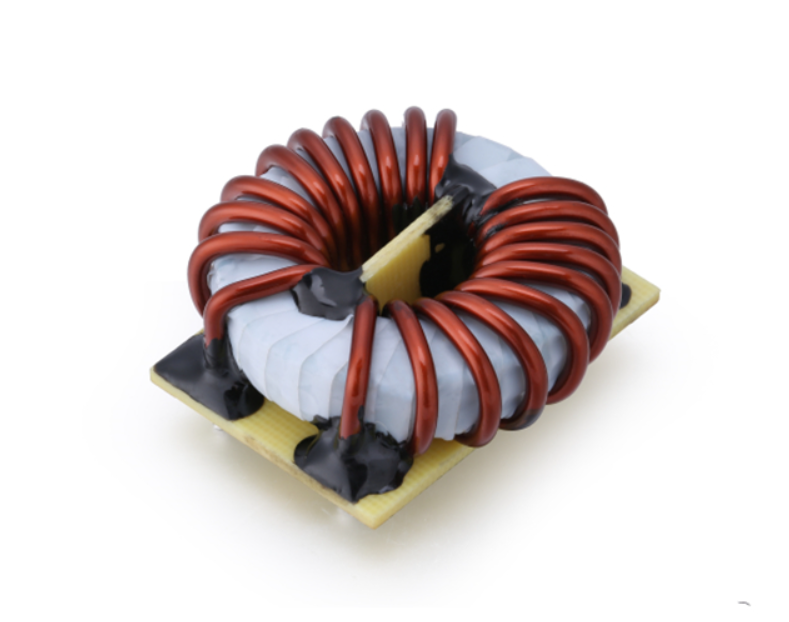
The CMB3307DG SERIES from Mentech is an example of a power magnetic component designed for industrial applications. This series uses a through-hole mounting type and has dimensions of 40.0 mm in length, 40.0 mm in width, and 16.5 mm in height. Its inductance range is 170~2200 μH, with rated current options from 17~62 A, supporting different power design requirements.
Key Factors When Selecting Magnetic Components
When selecting magnetic components, engineers often evaluate electrical parameters, mechanical structure, and environmental requirements. Inductance value, rated current, insulation performance, and resistance characteristics are important references during product selection.
For example, the CMB3307DG SERIES provides a Hi-Pot rating of 1500 Vac and a maximum DCR range of 1~7 mΩ. These specifications help engineers understand the component’s electrical characteristics during system design. Proper matching between components and circuits can improve design compatibility and simplify integration.
Manufacturing capability is also an important consideration for industrial buyers. Customers may require customized dimensions, winding structures, or performance adjustments according to specific equipment designs. Mentech develops magnetic components for different fields, including power modules, automotive electronics, solar-storage-charging systems, and communication equipment.
Applications of Magnetic Components Across Industries
Magnetic components are used in many industries where efficient energy conversion and signal transmission are required. In new energy vehicles, components such as OBC transformers, DC-DC transformers, drive transformers, BMS transformers, and filter inductors support vehicle electrical systems.
In solar and energy storage applications, magnetic components are applied in systems including micro inverters and high-power DC-DC conversion equipment. These applications require components that can adapt to different power levels and operating conditions.
Communication equipment also relies on magnetic components for signal transmission. Network transformers and chip network transformers are commonly used in communication systems, and compatibility between different product types can support various equipment designs. Through customized development, Mentech serves industrial customers looking for magnetic solutions for different application scenarios.
Conclusion: The Value of Professional Magnetic Component Development
Modern power systems require magnetic components that match electrical performance, mechanical design, and application requirements. Understanding transformer and inductor functions helps engineers make more suitable decisions during product development.
A professional power magnetics transformer supplier can provide technical support from component selection to customized manufacturing. With products such as the CMB3307DG SERIES and other magnetic components, Mentech supports customers in power, new energy, and communication industries through customized development and manufacturing services.
